Every gardening guide I picked up when I started assumed I had a lawn. I didn’t.
I had a first-floor flat with a narrow balcony, a south-facing wall, and a neighbour who’d grown tomatoes up there for years. That neighbour taught me more in one conversation than most books did.
If you’re in the same spot, this is the guide I wish I’d had.
A balcony isn’t a consolation prize. Containers, vertical growing and the right plant choices turn a balcony into a real garden. You just need to read your space before you start spending money.
Read your balcony first
Spend a day watching what your balcony actually does before you buy a single pot.
The two things that decide everything are light and wind. Hold your hand out at different times of day and see how many hours of direct sun the growing area gets.
A south or west-facing balcony often gets six or more hours in summer, which means fruiting crops are possible. A north or east-facing one may get three hours or fewer, and that’s fine. You just grow leaves instead of tomatoes.
Wind matters more on a balcony than in a back garden. You’re higher up, often more exposed, and wind dries pots out fast and can snap stems on taller plants.
If your railing bears the brunt, grow lower plants at the front and use the wall or a trellis behind it as a windbreak.
One more thing: balcony weight limits are real. If you’re in a flat, yours likely has a limit somewhere around 150 to 200 kg per square metre. Check with your landlord or building management before you start stacking heavy pots.
Wet compost is much heavier than dry. Large grow bags and lightweight compost mixes are your friends here. They hold decent root room while keeping the load down.
Containers that suit a balcony
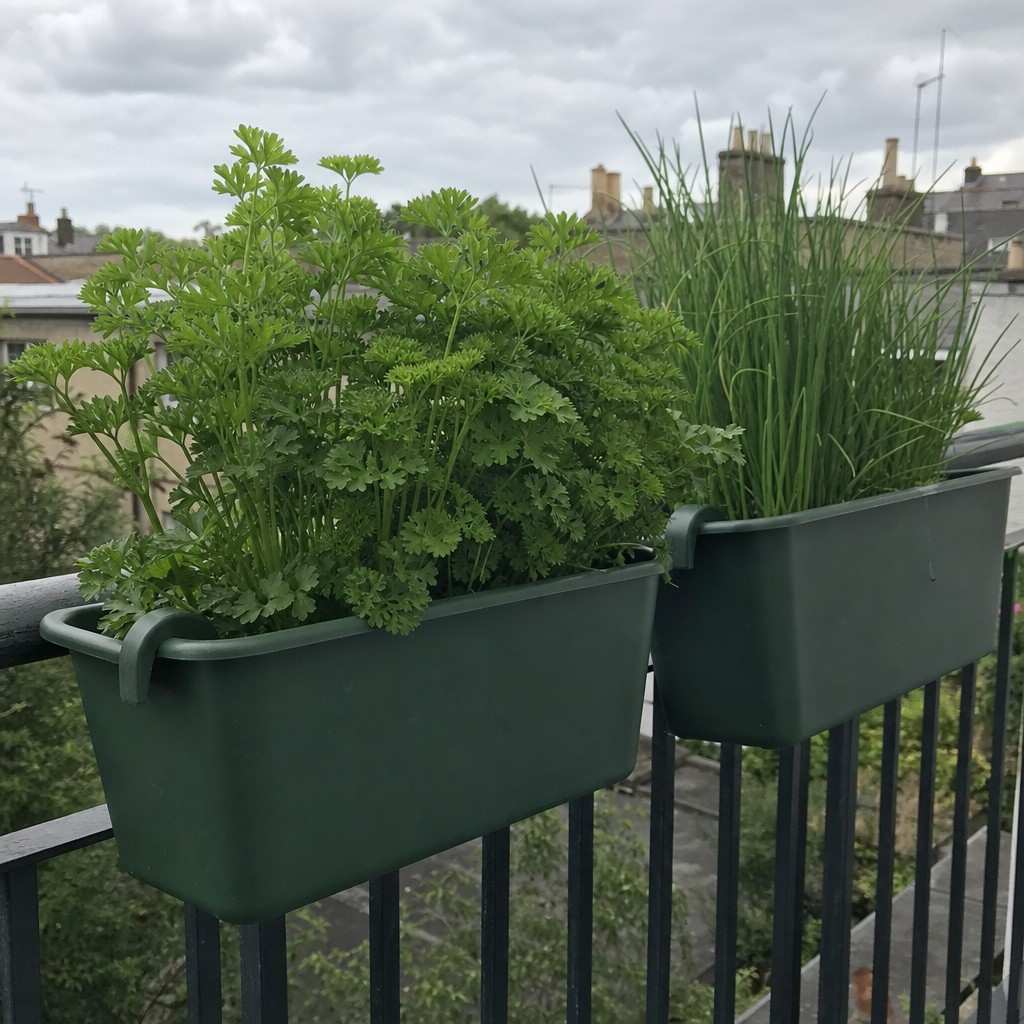
Rail planters hook straight over a balcony railing and don’t use any floor space at all.
They’re ideal for herbs, trailing plants, and salad leaves. A few hooked across the railing is usually my first recommendation to anyone starting out.
You can find a decent range of balcony rail planters on Amazon if you want to see the sizes and styles before buying locally.
Rail planters, stackable pots, and wall-mounted troughs solve the problem of floor space almost immediately.
For floor containers, go for the largest you can manage. Small pots dry out faster, overheat more, and give roots nowhere to go.
A 30 to 35 cm pot is the minimum for herbs; anything fruiting wants bigger. Lightweight fibre or plastic pots are worth choosing over terracotta on a balcony. They weigh far less when full.
If you want to grow upwards rather than sideways, a tower planter or a simple stacking system earns its keep in a tight space. I’ve written a fuller piece on how tower gardens work and whether they’re worth it if that route appeals to you.
What’s realistic to grow up there
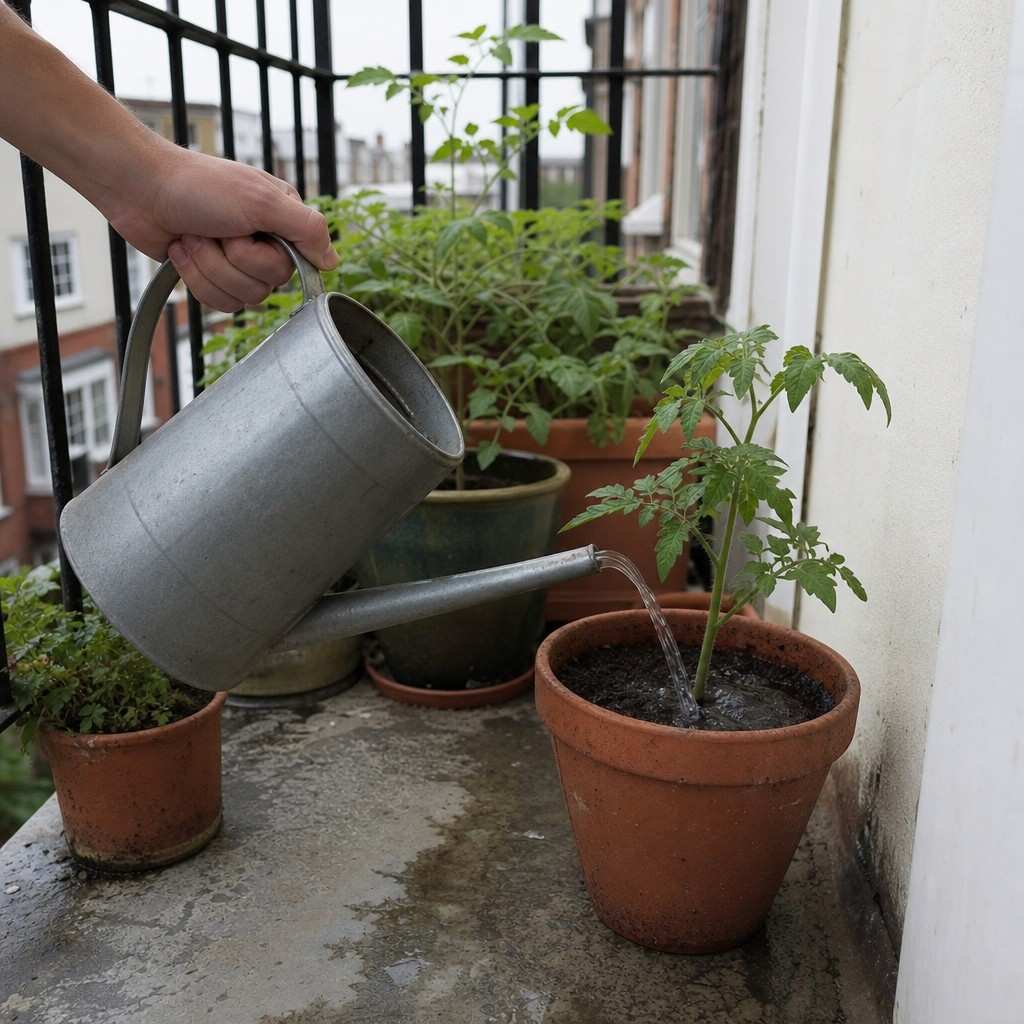
The honest list of what works on a balcony is longer than most people expect. It depends almost entirely on your light.
Six or more hours of sun opens up:
- Cherry tomatoes (a compact variety like Tumbling Tom does well in a hanging basket or deep pot)
- Chillies and peppers
- Courgettes if you have floor room and a big enough container
- Herbs: basil, parsley, chives, thyme, rosemary
Three to six hours of sun is plenty for:
- Salad leaves, rocket, spinach, chard
- Kale and spring onions
- Mint and coriander
If you’re mostly in shade, go all in on cut-and-come-again leaves.
They’re actually the highest-value crop for low light, and a few containers of mixed salad kept cut regularly will give you leaves for months. For a wider list of what performs well in pots, the easy vegetables to grow in pots article is a good companion to this one.
Start with the space and conditions you actually have, not the garden you wish you had.
If your balcony gets morning sun and afternoon shade, plan for that rather than hoping for more.
Watering on a balcony
Pots on a balcony dry out faster than anything else in a garden. Faster than pots in a sheltered yard, faster than beds below.
The combination of wind, limited compost volume, and sun on the sides of pots means you can go from adequately moist to bone dry in a few hours on a warm day.
In summer I check my balcony pots every morning. If you push your finger an inch or two into the compost and it’s dry, water it now, not tonight.
A few things that help:
- Water-retaining granules mixed into the compost when you pot up. They swell when wet and release slowly. I noticed a difference immediately on my herb pots.
- Saucers under pots to hold a little reservoir. Empty them after heavy rain so roots don’t sit in standing water, but in dry spells they buy you a few extra hours.
- Mulching the surface with a layer of bark or gravel slows evaporation noticeably, especially on bigger pots.
- Watering in the morning rather than midday gives plants a chance to absorb before the sun hits the containers at full strength.
Balcony containers also need feeding more often than ground plants. Use a balanced liquid feed every two to three weeks once plants are growing actively. Pots run low on nutrients faster than the ground does because every watering flushes some out.
Start smaller than you think you need to
One of the most useful things my neighbour told me was to resist the urge to fill every centimetre at once.
Start with three or four pots. Get comfortable with how fast they dry out, how your light moves across the day, which spots catch more wind.
A small, well-maintained balcony garden gives more pleasure and more food than an overcrowded one that’s hard to keep up with. You can always add more containers once you know what works.
If you’re starting with seeds, you can get most of what’s listed above going on a bright windowsill first. The guide to starting seeds indoors covers the method and the one mistake most beginners make with seedlings.
I’d rather tell you what worked and what flopped in my own pots than pretend everything thrives.
The truth is that my first balcony season was uneven. The herbs did well, the tomatoes sulked because the pot was too small, and I overwatered everything in April. The second season was much better, because I’d learned the balcony. Give yourself that same learning curve.
Once things are growing and looking nice, you might also want to think about somewhere comfortable to sit and actually enjoy it. The tips for choosing garden furniture piece covers what works in a small space, which matters as much on a balcony as anywhere.