Starting your own seeds indoors is the cheapest way I know to get more out of a small garden. A packet of seeds costs less than a single grown plant, and a sunny windowsill is all the space you need to raise dozens of them.
It also buys you time. Sow indoors a few weeks before the last frost and your plants get a head start, so they crop earlier once they go outside. For a small UK plot where every pot has to earn its place, that head start matters.
Start with the space and conditions you actually have. You do not need a greenhouse. A bright windowsill, a few containers, and a bag of compost will do.
Why bother starting indoors at all
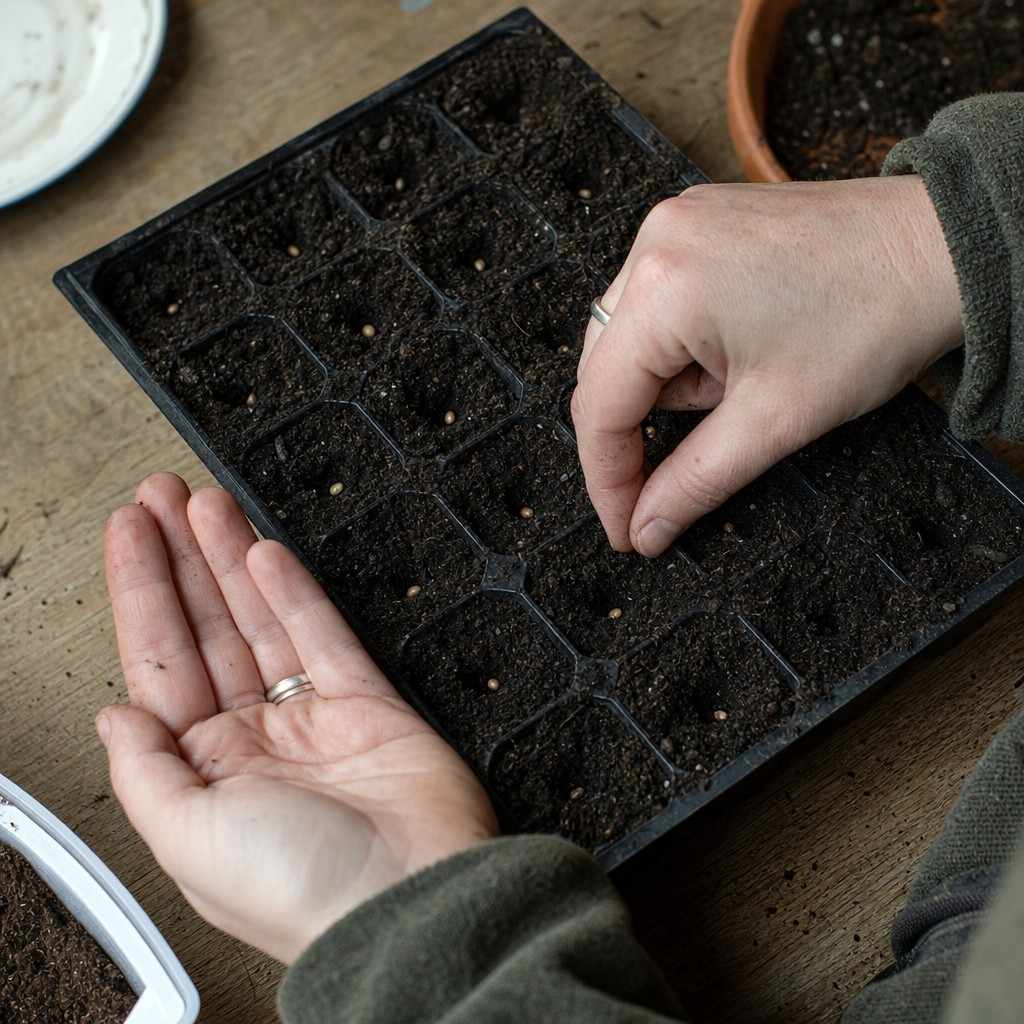
The point is a longer season and stronger plants for almost no money. Three reasons it is worth the windowsill space:
- An earlier harvest. Plants that start indoors mature sooner once they go out, so you are picking weeks ahead.
- Tender crops survive. Tomatoes, chillies and basil cannot handle a UK spring outdoors. Indoors, they get going safely until the frosts pass.
- More plants for your money. One seed packet raises far more plants than the same money spent on garden-centre seedlings.
If your aim is to squeeze the most from a small space, raising your own seedlings pairs well with growing upwards too. It is the same logic behind a tower garden’s space saving: get more growing out of less floor.
What you need to get going
You can start with almost nothing, or spend a little to make it tidier. The basics:
- Small containers with drainage holes. Module trays, small pots, or even clean yoghurt pots with a hole poked in the base.
- Seed compost, which is finer and lower in feed than standard compost.
- A windowsill that gets decent light.
- A little patience.
Soil blocks are worth a mention if you want to skip pots altogether. You press damp compost into firm cubes, sow into each one, and the roots stop neatly at the edge instead of circling a pot. They are cheap, they cut down on plastic, and seedlings transplant with almost no root disturbance.
A simple windowsill method
This is the whole routine, start to finish. It takes ten minutes to set up.
- Fill your containers with seed compost and firm it gently. Do not pack it down hard.
- Water it before you sow, so the seeds are not washed about.
- Sow at the depth on the packet. A rough rule is to cover a seed to about twice its own depth. Tiny seeds barely get covered at all.
- Label everything. You will not remember which is which in three weeks, however sure you are now.
- Keep the compost damp but never soggy, and put them somewhere warm and bright.
Once seedlings appear, the job changes from waiting to managing light, which is where most people go wrong.
Light is the thing most people get wrong
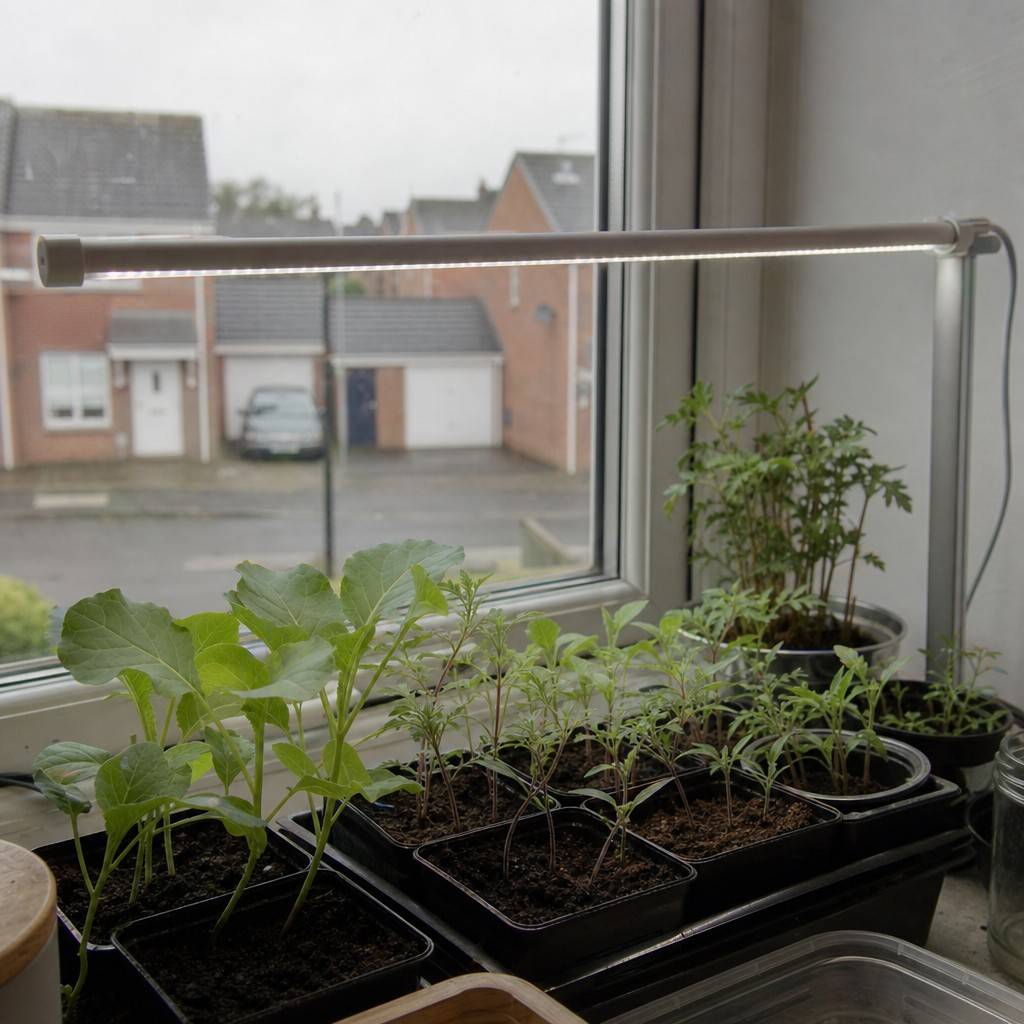
Leggy, pale seedlings almost always mean too little light, not too little warmth. A warm room with a dim windowsill gives you tall, floppy stems reaching for the window.
If your brightest sill still is not very bright, a small grow light makes a real difference, especially early in the year when UK daylight is short. You can compare compact grow lights on Amazon to see what fits a windowsill. Turn the pots every day or two as well, so the seedlings grow straight instead of leaning.
What to start indoors, and what to skip
Some crops love an indoor start; others would rather you left them alone. Worth starting on the sill:
- Tomatoes, chillies and peppers.
- Basil and other tender herbs.
- Courgettes and pumpkins, a couple of weeks before they go out.
Skip the indoor stage for root crops like carrots and parsnips. They hate being moved and do far better sown straight where they will grow. If you are still deciding what to grow at all, it helps to first work through choosing plants that suit your spot.
Moving them outside without a setback
Do not march a windowsill seedling straight into the garden. The change in light, wind and temperature will check its growth or worse.
Harden them off instead: put them outside for a few hours a day, then a little longer each day for a week or so, before they move out for good. It is a small faff, but it is the difference between a seedling that sulks and one that carries straight on growing.