The first time I bought plants from a garden centre I went entirely by what looked nice. A row of lavender, a couple of agapanthus, something showy I’ve forgotten the name of. I had a north-facing back garden with heavy clay soil. Everything struggled. The lavender rotted over winter.
The mistake wasn’t buying those plants. It was buying them before I’d understood what I actually had to offer. That is the one thing I’d tell anyone starting out: read your spot before you pick anything.
Start with the space and conditions you actually have, not the garden you wish you had. It’s a cliche in gardening because it’s true, and it saves you a lot of wasted money in year one.
Work out what your garden is actually like
Before anything goes in the ground or a pot, spend a week paying attention. You need to answer three questions:
- Light. Which direction does your garden or balcony face? South-facing gets the most sun; north-facing gets the least. Mark roughly where the sun hits across the day. Full sun is six-plus hours of direct sun; partial shade is around three to four hours; full shade is less.
- Soil (if you have a bed). Pick up a handful and squeeze it. Does it hold together in a clump (clay) or fall apart in your hand (sandy)? Clay holds moisture but can get waterlogged; sandy drains fast but dries out. If it crumbles loosely and has a dark colour, you’ve got decent loam. Most plants cope with loam. Clay and sandy soils need a little more thought.
- Space. How much room have you actually got? Be honest about this. A 60cm-wide balcony railing and a 10m bed are completely different conversations.
If you’re mostly growing in pots, the soil question answers itself: you buy the compost that suits your plants rather than inheriting whatever’s already in the ground. That’s one of the real advantages of container growing, and one of the reasons I’ve shifted most of my growing into pots over the years. I can find more information on setting up a garden around what you actually have useful here too.
Start with plants that forgive a beginner
Forgiving plants are the ones that don’t make you pay for a bad week. When I was starting out I needed plants that would carry on if I forgot to water for a few days, or if the weather did something unexpected. Here’s what’s worked for me and what I’d suggest to anyone:
For a sunny spot (south or west-facing):
– Lavender (well-drained soil only, I learned the hard way)
– Hardy geraniums (cranesbills, not pelargoniums) — they flower for months and come back every year
– Sedums and other succulents in pots
– Courgettes in a big pot if you want veg
For partial shade (north-east or under a tree):
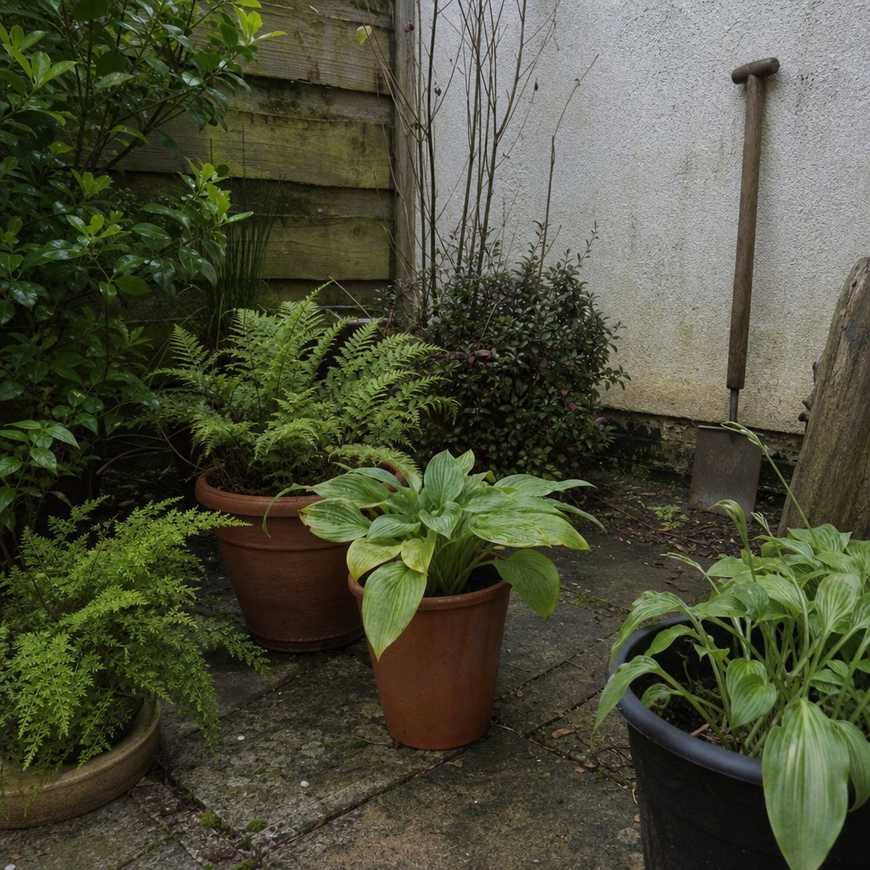
– Hostas in pots — slugs will find them, but everything else about them is easy
– Ferns — happy with little sun and come back reliably
– Primroses for early colour
– Mint in a container (always keep it contained, it spreads everywhere otherwise)
For full shade:
– Hellebores
– Ivy for ground cover or a trailing pot
– Japanese anemones for late-season colour
The honest truth is that most beginner failures come from sun-loving plants in shade or shade-lovers in a baking south-facing spot. Match the light requirement on the label to what you’ve actually measured, and you’ve solved half the problem already.
One more thing: don’t overlook annuals in your first season. Marigolds, nasturtiums, sweet peas — they’re cheap, fast, and if they don’t work, you’ve lost almost nothing. They’re a good way to learn what a spot can actually grow before you commit to more expensive perennials.
Small spaces and pots: different rules apply
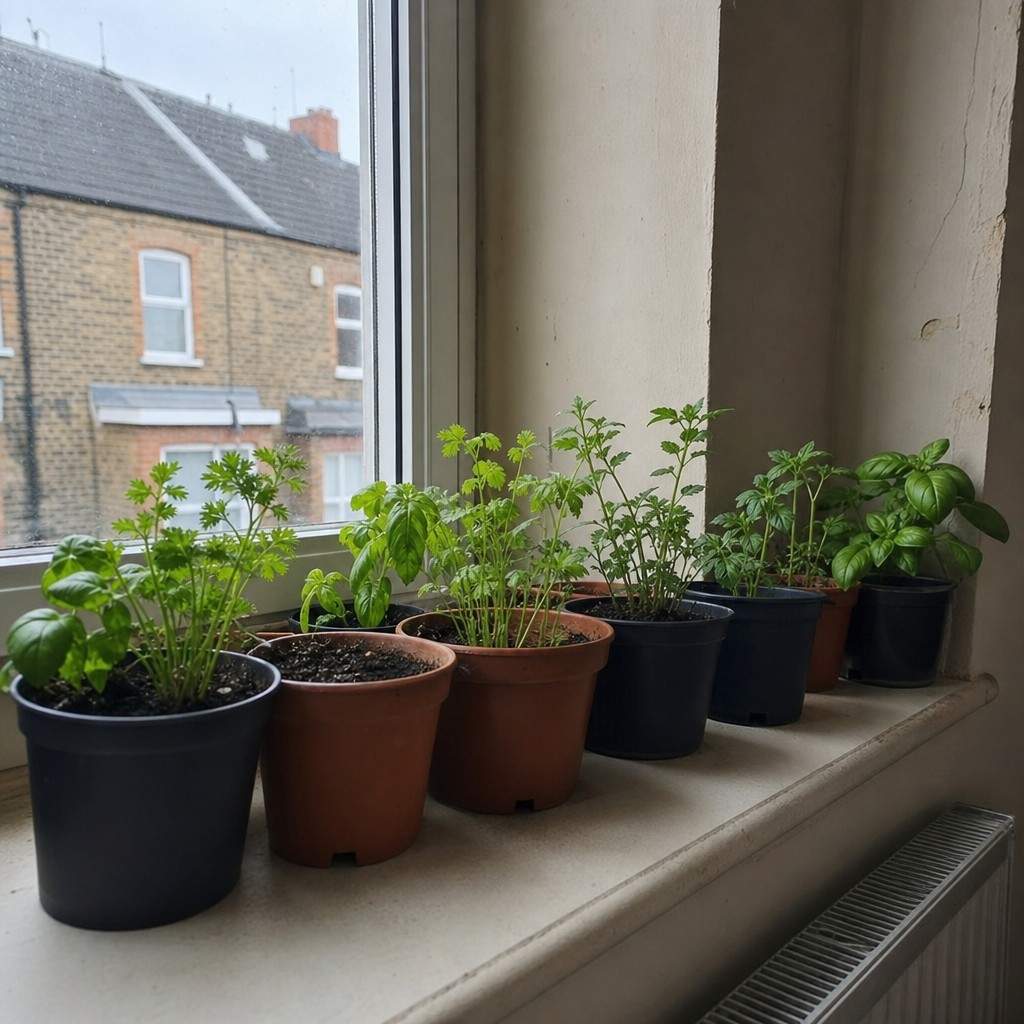
Growing in containers changes what’s possible and what isn’t. A plant that would need a 90cm bed to spread can live happily in a pot if you pick a compact variety. But the rules of containers are their own thing.
The biggest one: pots dry out fast, especially terracotta ones in a sunny spot. A plant that would survive occasional neglect in open soil can die in a pot in two hot days. You need to check them more often than you’d think, especially from May through August.
Compost matters more in a pot too, because the plant has nowhere else to go for nutrients. Peat-free multipurpose compost is a decent starting point for most things; you can find peat-free multipurpose compost on Amazon if you want to compare options without a trip to the garden centre.
Small spaces aren’t a dead end. Containers, vertical growing and tower gardens turn a balcony or patio into a real garden. If you’re short on floor space, going upwards is worth thinking about — I went into more detail on how that works in my piece on the benefits of tower gardening.
A note on the UK growing calendar
UK timing is its own thing, and advice copied from a warmer country will catch you out.
One thing that tripped me up early: advice that isn’t written for the UK. Frost dates, when to plant out, what “spring” means — all of this varies significantly between, say, Yorkshire and the Home Counties, let alone between the UK and the US.
The RHS website is where I go for UK-specific timing. Most seed packets also include sowing and planting-out windows on the back, which are written for UK conditions. Trust those over general advice from gardening blogs that don’t specify their location.
If you’re buying plants as seedlings from a garden centre, ask when it’s safe to put them outside for your area. Any decent garden centre will tell you. The rough UK rule for frost-tender plants is not before late May in most of England, later in Scotland.
Once you’ve picked your plants
I’d rather tell you what worked and what flopped in my own pots than pretend everything thrives. The most important thing after planting is just to watch what happens. If something looks unhappy, it’s usually light or water. Check both before assuming the plant is a lost cause.
Once you’re happy with what you’re growing and want to start from scratch next season, starting seeds indoors is a satisfying next step — and far cheaper than buying seedlings every year. But it’s a step, not a starting point. Get a season’s growing under your belt first.